Why Does My Nose Tip Look Too High After Rhinoplasty?
The first look after rhinoplasty can be confusing. Your nose may look wider, stiffer, more upturned, or less balanced than expected. This early appearance is shaped by swelling and healing—not only by the final nasal structure.
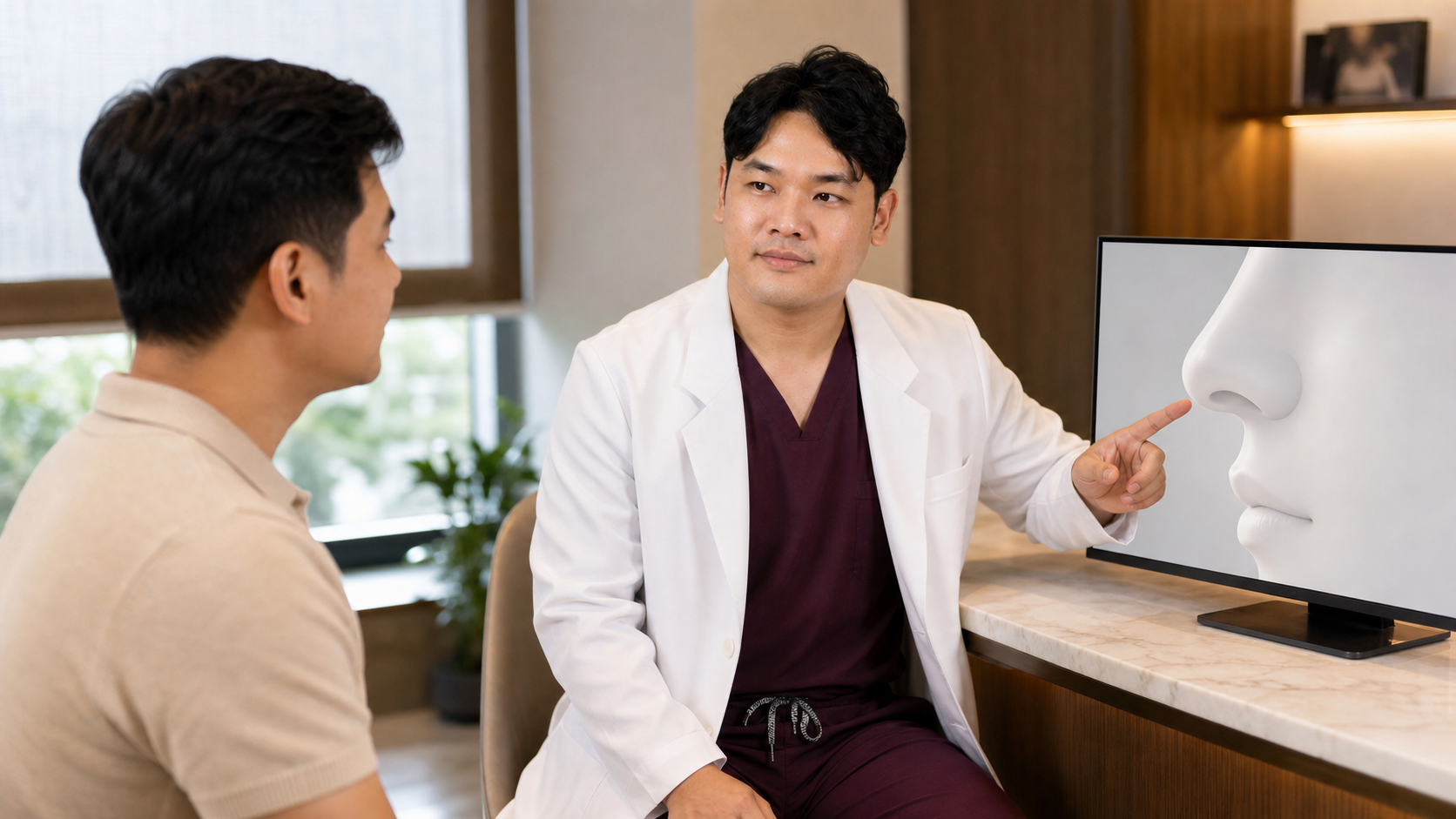
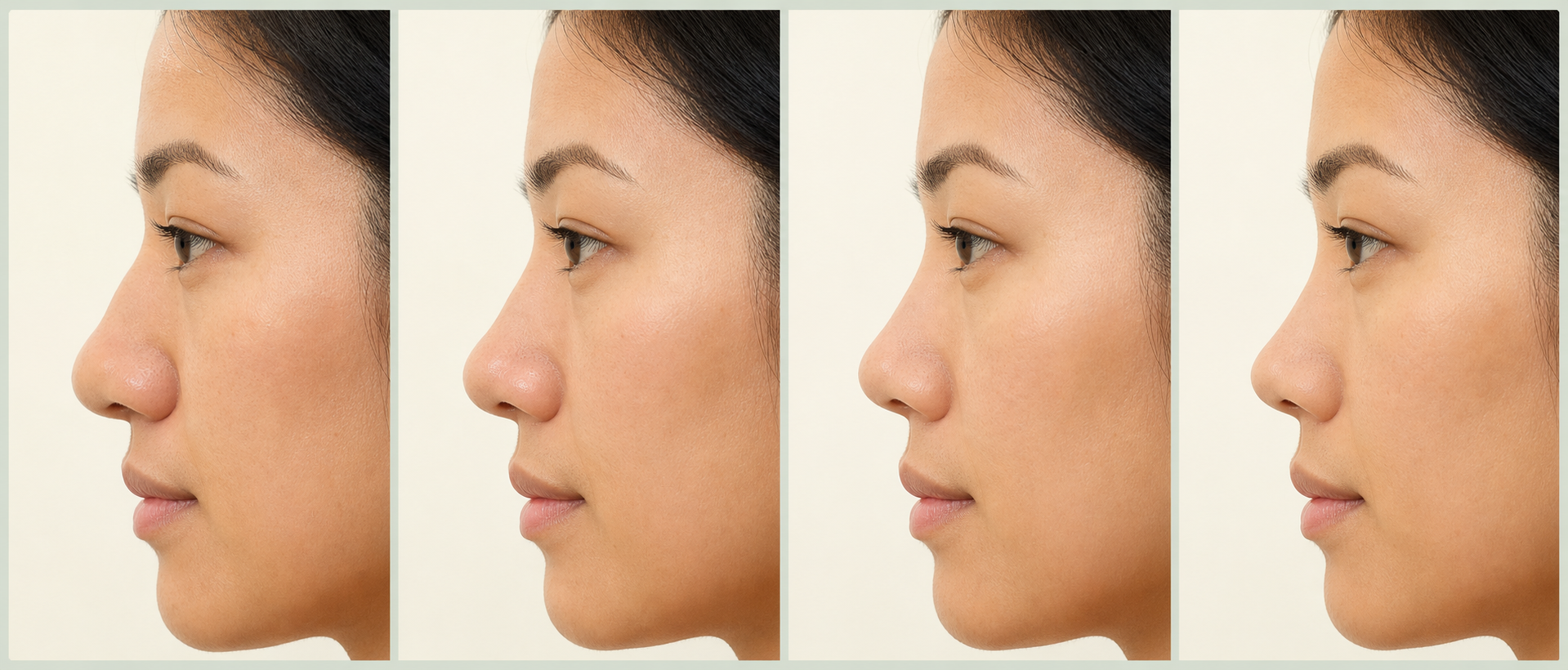
Why the Tip Can Look Higher
Swelling is not distributed evenly. The nasal tip has thicker soft tissue and can hold swelling longer than the bridge. Stiffness, internal support, taping, and the way swollen tissues reflect light may make the tip look unusually high or rounded during early recovery.
A Practical Healing Timeline
- First 1–2 weeks: swelling and bruising are most noticeable; the nose can look unfamiliar.
- Weeks 2–6: obvious swelling begins easing, but the tip can remain firm and elevated-looking.
- Months 3–6: definition becomes easier to recognize as tissues soften.
- Months 6–12 and beyond: refinement continues, especially at the tip. Revision cases and thicker skin may take longer.
These are broad guideposts, not deadlines. Swelling can fluctuate and may be more noticeable in the morning. ASPS notes that final contour can take up to a year, and sometimes longer, to refine.
What Not to Do
Do not push, massage, tape, or try to force the tip downward unless your NDV MED team specifically instructs you. Avoid judging the result from daily selfies; camera distance, angle, and lighting exaggerate small differences.
When to Call
Contact your surgical team for sudden or one-sided swelling, worsening redness, fever, pus-like drainage, uncontrolled bleeding, severe pain, skin color change, new breathing difficulty, or any rapid change. For ordinary appearance concerns, scheduled photographs and follow-up give a more useful comparison than day-to-day checking.
References
Talk With Your NDV MED Team
Bring your questions in your own words. Your NDV MED team will explain what is normal, what can realistically improve, the suitable choices, important risks, recovery, and the complete quotation before you decide.
This article provides general educational information and is not a diagnosis or a substitute for an in-person medical consultation. Suitability, outcomes, risks, and recovery vary between patients.